Orchid Coir Chips Block (50 to 60L) (4.5kg)
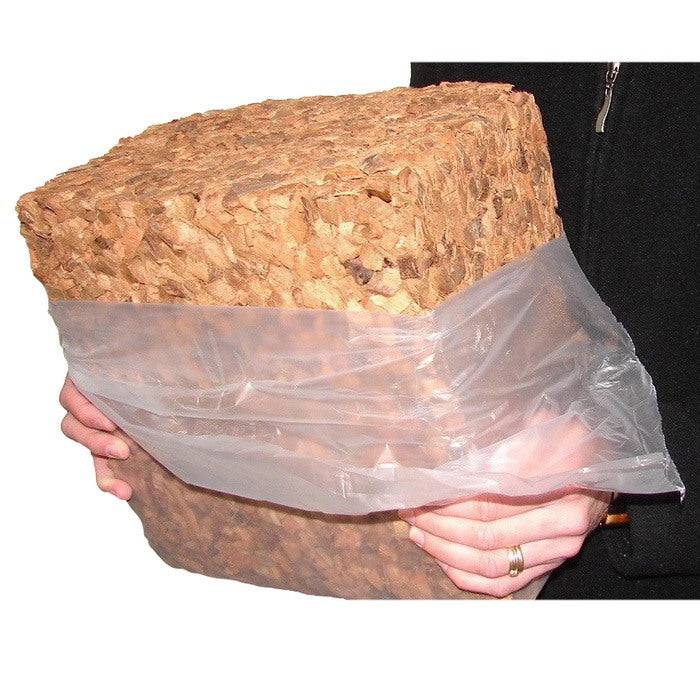
Orchid Coir Chips Block (4.5kg). Will expand to 50 to 60 litres.
These husk chips are pre-cut chunks from coconut husk. Washed, heat-treated husk chips are supplied in compressed, individually wrapped 5kg blocks. Husk chip blocks are hand breakable and can be wet and rewet easily. To use, simply soak each brick in warm water for 30-45 minutes, and each block will break out from 50L to 60L. The commercial potting soil grade husk chips last longer than bark with little degradation. Wet coconut husk chips hold water and air like a sponge, providing both excellent air-filled porosity and water holding capacity. It aids in the rapid growth of Orchids, Bromeliads, Anthuriums and many other plants that benefit from an aerated medium. They are also ideal for potting mixes to add life and increase microorganism activity. It can ideally replace hardwood and softwood bark.
Size Guide:
3-7mm (FINE)– A primary ingredient in propagation mixes for orchids and plants that require high AFP.
7-12mm (MEDIUM) – For many species of orchids like Cymbidiums, Zygopetalums, Dendrobiums, Oncidiums, small Cattleyas and Phalaenopsis.
12-18mm (COARSE) – Mainly used for large orchids like large Australian native Dendrobiums, large Cattleyas and Phalaenopsis.
The coarse grade has been discontinued; please consider Tropicoir Husk Coir Chips Coarse instead.
Coir chips, derived from coconut husks, are a popular growing medium for orchids and other plants due to their excellent aeration, drainage, and water retention properties. Different grades of coir chips—fine (3-7mm), medium (7-12mm), and coarse (12-18mm)—serve various purposes depending on the plant's needs and environmental conditions.
Grades of Coir Chips and Their Uses
1. Fine Coir Chips (3-7mm)
- Best For: Seedlings, small orchids (e.g., Phalaenopsis, Oncidium), fine-rooted plants, and moisture-loving plants.
-
Characteristics:
- Retains more water due to its smaller particle size.
- Provides moderate aeration.
- Decomposes faster than coarser grades.
-
Other Uses:
- This component is in potting mixes for ferns, anthuriums, and houseplants.
- Soil amendment to improve water retention.
2. Medium Coir Chips (7-12mm)
- Best For: Mature orchids (e.g., Cattleya, Dendrobium), epiphytes, and plants requiring balanced aeration and moisture.
-
Characteristics:
- Provides a good balance between aeration and water retention.
- Slower decomposition compared to fine chips.
- Prevents root rot by maintaining airflow around roots.
-
Other Uses:
- Mulching for small to medium plants.
- Component in hydroponic and terrarium substrates.
3. Coarse Coir Chips (12-18mm)
- Best For: Large orchids (e.g., Vanda, Cymbidium), cacti, succulents, and plants requiring high drainage.
-
Characteristics:
- Maximum aeration with minimal water retention.
- Highly resistant to decomposition.
- Prevents root suffocation and promotes strong root growth.
-
Other Uses:
- Mulching for large plants and trees.
- Landscaping and erosion control.
- Used in reptile and amphibian enclosures for humidity control.
Blending Coir Chips for Custom Mixes
Many growers mix different grades to create a medium tailored to their orchids’ needs. For example:
- Fine + Medium: Good for hybrid orchids that need moderate moisture.
- Medium + Coarse: Ideal for epiphytic orchids needing high aeration.
- All Three Grades: Provides a well-balanced mix suitable for a variety of orchids.
Frequently Asked Questions:
Q. I'm looking for graded coconut coir. I'm finding that a lot on the market contains too many fines. Is your coir graded properly?
A. Yes, this coconut coir is graded properly.
Q. Can the coir blocks be used right away after the first soaking, or does it need to be rinsed several times to get rid of the salt?
A. I got this answer from the manufacturer. "Personally, I just rinse mine once. BUT, the advice for the customer is that they need to check the EC (total dissolved salts) before planting. Whilst it is washed and EC is low, any salt that is present is sodium chloride. Sodium is not good for plants: high sodium level hampers the uptake of calcium by plants. Saturate the blocks and allow them to stand for 24 hrs. Measure the EC (or CF) in the ingoing water as well as in the run-off water (drain). When the EC in the run-off water is 1.5 points higher than the EC of the ingoing water, the coir needs further rinsing. This should be continued until the difference of the ECs is less than 1.5"
Q. What grade of coir do you recommend for repotting begonia plants?
A. After reaching out to the manufacturer, they suggested the medium grade, 7-12mm.
Q. I'm Interested in purchasing these Coir Blocks to be used as bedding for my reptile enclosures for my snakes and lizards. I was just wondering if this product is 100% coconut bark, ONLY with no added fertilisers or chemicals?
A. I got the following reply from our supplier: "Yes, definitely no added chemicals or fertilisers. However, all coir will naturally contain some sodium chloride, and I would suggest flushing if this could be an issue".
See the video to see how to wet and expand the coir block.
Product Information
Product Information
Shipping & Returns
Shipping & Returns
Orchid Coir Chips Block (50 to 60L) (4.5kg)
Orchid Coir Chips Block (50 to 60L) (4.5kg)
Orchid Coir Chips Block (4.5kg). Will expand to 50 to 60 litres.
These husk chips are pre-cut chunks from coconut husk. Washed, heat-treated husk chips are supplied in compressed, individually wrapped 5kg blocks. Husk chip blocks are hand breakable and can be wet and rewet easily. To use, simply soak each brick in warm water for 30-45 minutes, and each block will break out from 50L to 60L. The commercial potting soil grade husk chips last longer than bark with little degradation. Wet coconut husk chips hold water and air like a sponge, providing both excellent air-filled porosity and water holding capacity. It aids in the rapid growth of Orchids, Bromeliads, Anthuriums and many other plants that benefit from an aerated medium. They are also ideal for potting mixes to add life and increase microorganism activity. It can ideally replace hardwood and softwood bark.
Size Guide:
3-7mm (FINE)– A primary ingredient in propagation mixes for orchids and plants that require high AFP.
7-12mm (MEDIUM) – For many species of orchids like Cymbidiums, Zygopetalums, Dendrobiums, Oncidiums, small Cattleyas and Phalaenopsis.
12-18mm (COARSE) – Mainly used for large orchids like large Australian native Dendrobiums, large Cattleyas and Phalaenopsis.
The coarse grade has been discontinued; please consider Tropicoir Husk Coir Chips Coarse instead.
Coir chips, derived from coconut husks, are a popular growing medium for orchids and other plants due to their excellent aeration, drainage, and water retention properties. Different grades of coir chips—fine (3-7mm), medium (7-12mm), and coarse (12-18mm)—serve various purposes depending on the plant's needs and environmental conditions.
Grades of Coir Chips and Their Uses
1. Fine Coir Chips (3-7mm)
- Best For: Seedlings, small orchids (e.g., Phalaenopsis, Oncidium), fine-rooted plants, and moisture-loving plants.
-
Characteristics:
- Retains more water due to its smaller particle size.
- Provides moderate aeration.
- Decomposes faster than coarser grades.
-
Other Uses:
- This component is in potting mixes for ferns, anthuriums, and houseplants.
- Soil amendment to improve water retention.
2. Medium Coir Chips (7-12mm)
- Best For: Mature orchids (e.g., Cattleya, Dendrobium), epiphytes, and plants requiring balanced aeration and moisture.
-
Characteristics:
- Provides a good balance between aeration and water retention.
- Slower decomposition compared to fine chips.
- Prevents root rot by maintaining airflow around roots.
-
Other Uses:
- Mulching for small to medium plants.
- Component in hydroponic and terrarium substrates.
3. Coarse Coir Chips (12-18mm)
- Best For: Large orchids (e.g., Vanda, Cymbidium), cacti, succulents, and plants requiring high drainage.
-
Characteristics:
- Maximum aeration with minimal water retention.
- Highly resistant to decomposition.
- Prevents root suffocation and promotes strong root growth.
-
Other Uses:
- Mulching for large plants and trees.
- Landscaping and erosion control.
- Used in reptile and amphibian enclosures for humidity control.
Blending Coir Chips for Custom Mixes
Many growers mix different grades to create a medium tailored to their orchids’ needs. For example:
- Fine + Medium: Good for hybrid orchids that need moderate moisture.
- Medium + Coarse: Ideal for epiphytic orchids needing high aeration.
- All Three Grades: Provides a well-balanced mix suitable for a variety of orchids.
Frequently Asked Questions:
Q. I'm looking for graded coconut coir. I'm finding that a lot on the market contains too many fines. Is your coir graded properly?
A. Yes, this coconut coir is graded properly.
Q. Can the coir blocks be used right away after the first soaking, or does it need to be rinsed several times to get rid of the salt?
A. I got this answer from the manufacturer. "Personally, I just rinse mine once. BUT, the advice for the customer is that they need to check the EC (total dissolved salts) before planting. Whilst it is washed and EC is low, any salt that is present is sodium chloride. Sodium is not good for plants: high sodium level hampers the uptake of calcium by plants. Saturate the blocks and allow them to stand for 24 hrs. Measure the EC (or CF) in the ingoing water as well as in the run-off water (drain). When the EC in the run-off water is 1.5 points higher than the EC of the ingoing water, the coir needs further rinsing. This should be continued until the difference of the ECs is less than 1.5"
Q. What grade of coir do you recommend for repotting begonia plants?
A. After reaching out to the manufacturer, they suggested the medium grade, 7-12mm.
Q. I'm Interested in purchasing these Coir Blocks to be used as bedding for my reptile enclosures for my snakes and lizards. I was just wondering if this product is 100% coconut bark, ONLY with no added fertilisers or chemicals?
A. I got the following reply from our supplier: "Yes, definitely no added chemicals or fertilisers. However, all coir will naturally contain some sodium chloride, and I would suggest flushing if this could be an issue".
See the video to see how to wet and expand the coir block.
Original: $12.00
-70%$12.00
$3.60Product Information
Product Information
Shipping & Returns
Shipping & Returns
Description
Orchid Coir Chips Block (4.5kg). Will expand to 50 to 60 litres.
These husk chips are pre-cut chunks from coconut husk. Washed, heat-treated husk chips are supplied in compressed, individually wrapped 5kg blocks. Husk chip blocks are hand breakable and can be wet and rewet easily. To use, simply soak each brick in warm water for 30-45 minutes, and each block will break out from 50L to 60L. The commercial potting soil grade husk chips last longer than bark with little degradation. Wet coconut husk chips hold water and air like a sponge, providing both excellent air-filled porosity and water holding capacity. It aids in the rapid growth of Orchids, Bromeliads, Anthuriums and many other plants that benefit from an aerated medium. They are also ideal for potting mixes to add life and increase microorganism activity. It can ideally replace hardwood and softwood bark.
Size Guide:
3-7mm (FINE)– A primary ingredient in propagation mixes for orchids and plants that require high AFP.
7-12mm (MEDIUM) – For many species of orchids like Cymbidiums, Zygopetalums, Dendrobiums, Oncidiums, small Cattleyas and Phalaenopsis.
12-18mm (COARSE) – Mainly used for large orchids like large Australian native Dendrobiums, large Cattleyas and Phalaenopsis.
The coarse grade has been discontinued; please consider Tropicoir Husk Coir Chips Coarse instead.
Coir chips, derived from coconut husks, are a popular growing medium for orchids and other plants due to their excellent aeration, drainage, and water retention properties. Different grades of coir chips—fine (3-7mm), medium (7-12mm), and coarse (12-18mm)—serve various purposes depending on the plant's needs and environmental conditions.
Grades of Coir Chips and Their Uses
1. Fine Coir Chips (3-7mm)
- Best For: Seedlings, small orchids (e.g., Phalaenopsis, Oncidium), fine-rooted plants, and moisture-loving plants.
-
Characteristics:
- Retains more water due to its smaller particle size.
- Provides moderate aeration.
- Decomposes faster than coarser grades.
-
Other Uses:
- This component is in potting mixes for ferns, anthuriums, and houseplants.
- Soil amendment to improve water retention.
2. Medium Coir Chips (7-12mm)
- Best For: Mature orchids (e.g., Cattleya, Dendrobium), epiphytes, and plants requiring balanced aeration and moisture.
-
Characteristics:
- Provides a good balance between aeration and water retention.
- Slower decomposition compared to fine chips.
- Prevents root rot by maintaining airflow around roots.
-
Other Uses:
- Mulching for small to medium plants.
- Component in hydroponic and terrarium substrates.
3. Coarse Coir Chips (12-18mm)
- Best For: Large orchids (e.g., Vanda, Cymbidium), cacti, succulents, and plants requiring high drainage.
-
Characteristics:
- Maximum aeration with minimal water retention.
- Highly resistant to decomposition.
- Prevents root suffocation and promotes strong root growth.
-
Other Uses:
- Mulching for large plants and trees.
- Landscaping and erosion control.
- Used in reptile and amphibian enclosures for humidity control.
Blending Coir Chips for Custom Mixes
Many growers mix different grades to create a medium tailored to their orchids’ needs. For example:
- Fine + Medium: Good for hybrid orchids that need moderate moisture.
- Medium + Coarse: Ideal for epiphytic orchids needing high aeration.
- All Three Grades: Provides a well-balanced mix suitable for a variety of orchids.
Frequently Asked Questions:
Q. I'm looking for graded coconut coir. I'm finding that a lot on the market contains too many fines. Is your coir graded properly?
A. Yes, this coconut coir is graded properly.
Q. Can the coir blocks be used right away after the first soaking, or does it need to be rinsed several times to get rid of the salt?
A. I got this answer from the manufacturer. "Personally, I just rinse mine once. BUT, the advice for the customer is that they need to check the EC (total dissolved salts) before planting. Whilst it is washed and EC is low, any salt that is present is sodium chloride. Sodium is not good for plants: high sodium level hampers the uptake of calcium by plants. Saturate the blocks and allow them to stand for 24 hrs. Measure the EC (or CF) in the ingoing water as well as in the run-off water (drain). When the EC in the run-off water is 1.5 points higher than the EC of the ingoing water, the coir needs further rinsing. This should be continued until the difference of the ECs is less than 1.5"
Q. What grade of coir do you recommend for repotting begonia plants?
A. After reaching out to the manufacturer, they suggested the medium grade, 7-12mm.
Q. I'm Interested in purchasing these Coir Blocks to be used as bedding for my reptile enclosures for my snakes and lizards. I was just wondering if this product is 100% coconut bark, ONLY with no added fertilisers or chemicals?
A. I got the following reply from our supplier: "Yes, definitely no added chemicals or fertilisers. However, all coir will naturally contain some sodium chloride, and I would suggest flushing if this could be an issue".
See the video to see how to wet and expand the coir block.